

Disclaimer: This article reflects personal experiences and opinions. AIS should be used as a supplemental awareness tool only and does not replace proper navigation practices, adherence to maritime regulations, or maintaining a safe lookout at all times.
Why We Watch River Traffic and Why You Should Too
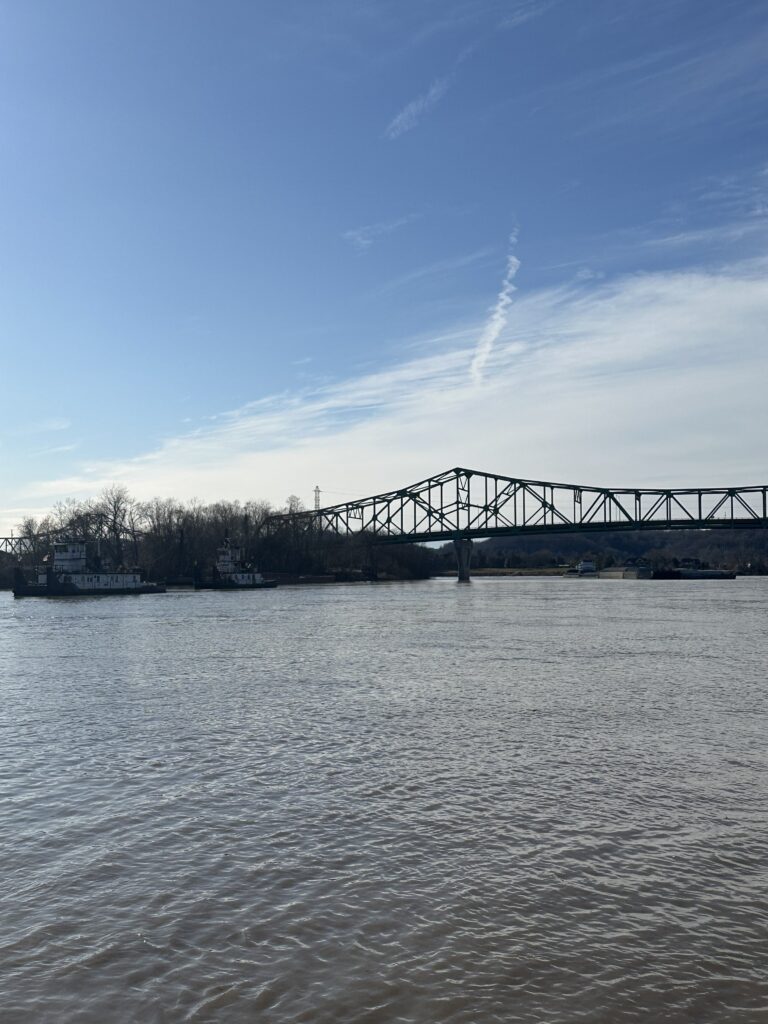
We can remember the first experience of moving rapidly out of a pushboat’s way on the Kanawha River like it was yesterday.
With a steady focus on the rods and eyes downriver, it was easy to forget about anything upriver…until the horn sounded.
It was incredible how easily that colossal pushboat slipped around the bend. One second we were watching rod tips. The next, we were scrambling. Immediately, we had to pull lines and move with purpose.
That moment changed how we fish big rivers.
Now we use AIS every time we are on navigable water.
Fishing rivers with commercial traffic, whether it’s the Ohio River, Mississippi River, Tennessee River, or beyond, understanding vessel movement isn’t optional. It’s part of fishing safely and smartly.
The Harsh Reality of Fishing Working Rivers
Rivers are highways.
Most Commercial Vessels can’t stop quickly. They can’t swerve. And in tight bends, they may not see a small fishing boat tucked along a seam, the side, or wing dam until they’re already committed.
On winding stretches like portions of the Kanawha River, Cumberland River, or Tennessee River, blind corners make that risk even greater.
When we heard that horn, it wasn’t aggressive, it was necessary.
And it reminded me of something important:
We are playing (even in a tournament) and they are working. It’s not that they want to make us move, or are trying to ruin the spot, they have a job to do, and they want to keep us safe.
What is AIS?
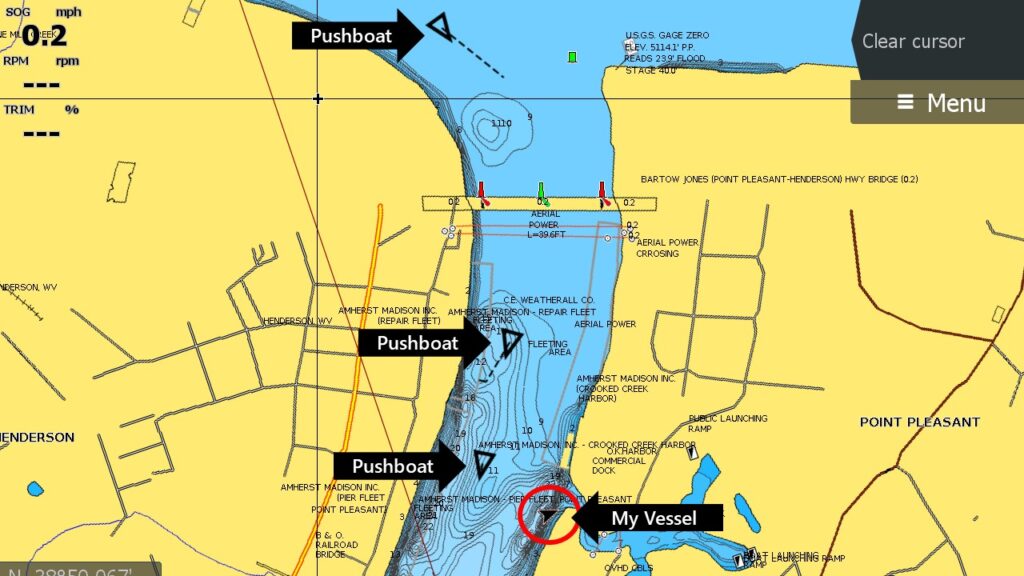
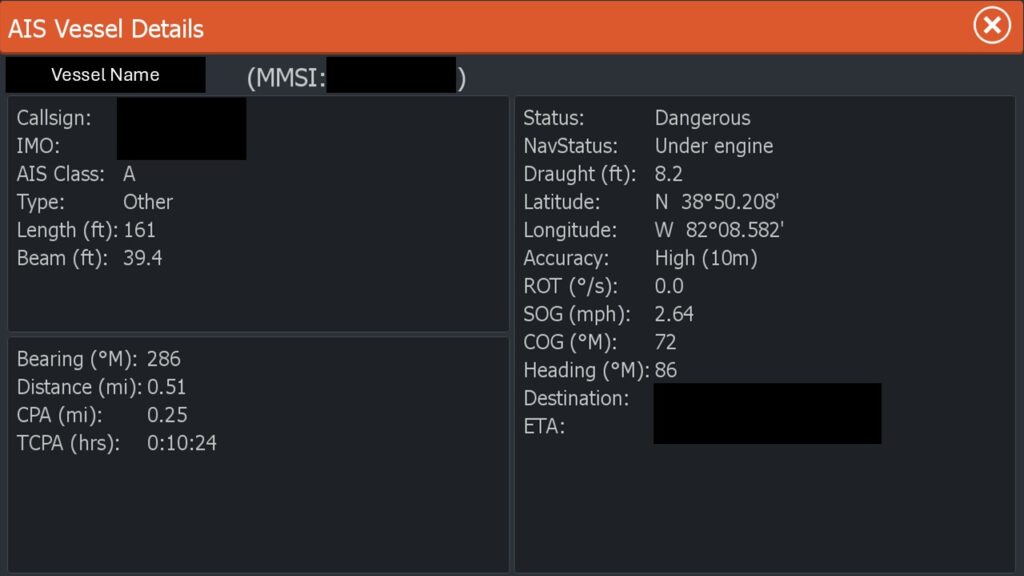
AIS (or Automatic Identification System) is a tracking system that is used to broadcast real-time information over VHF radio, including:
- GPS position
- Speed
- Heading
- Vessel name
- Vessel type
That means most of the time commercial vessels can be seen on a map before ever hearing the horn.
How the ALFAUMP Team Implements AIS
1. Looking Around River Bends and Traffic Areas
Rivers curve. Sound doesn’t always travel far against wind and current.
AIS shows us:
- Traffic approaching from upriver
- Speed and estimated arrival
- Meeting situations between vessels
- Slowing or maneuvering vessels
Instead of reacting to a horn blast, we are planning ahead. We can appropriately setup on a spot the first time, keeping baits in the water longer and more efficiently with more confidence in safety.
2. Checking Locks for Upriver or Downriver Traffic to Predict Current Changes
Looking ahead, it is easy to predict if there will be a surge of water from a lock dump. These surges can trigger or turn off bites depending on the pattern. Knowing in advance allows up to be better prepared when around these scenarios.
3. Fishing Around Seams and Current Switches
When a large pushboat passes, especially on small rivers, it changes the river temporarily.
- Current accelerates
- Eddies reposition
- Baitfish scatter
We’ve learned to anticipate those changes instead of being disrupted by them.
What AIS Won’t Show You
AIS isn’t a magic shield and not every Vessel has it on or installed.
You won’t likely see:
- Most small recreational boats
- Bass boats
- Jon boats
- Kayaks
It’s a layer of awareness, but not a replacement for vigilance.
You still look upriver and downriver.
You still listen.
You still respect the channel and navigation regulations.
We use it as a tool before the setup, creating a safer fishing strategy. IT IS NOT a replacement for safe navigation.
How We Monitor AIS Data
The ALFAUMP Team utilizes the Lowrance Link 9 VHF Radio and HDS Fishfinder system to monitor river traffic. This integration is done over the NMEA 2000 Network and is extremely easy to set up (as it is pretty much plug and play).
What You Need to Implement AIS
- Fishfinder/Chartplotter with AIS Capability – Most Larger Lowrance, Humminbird, and Garmin units have this capability.
- NMEA 2000 Network
- VHF Radio with AIS Capability
- VHF Antenna
Just give us a call or send us an email and we can help you get the right setup!
Final Thoughts
If you fish navigable rivers with commercial traffic, AIS is one of the simplest upgrades you can make.
It improves:
- Safety
- Strategic positioning
- Overall awareness
And most importantly, it helps keep a relaxing day of fishing from turning into a scramble at the sound of a horn!
However, it is not a replacement for safe navigation and US Coast Guard/State Regulations, so always Pay Close Attention to other Boaters and Vessels when on the water.
Safety Notice: Water conditions and vessel traffic can change rapidly. AIS data may be delayed or incomplete. Always follow local navigation laws, maintain situational awareness, and operate your vessel responsibly. The author assumes no liability for actions taken based on this content.